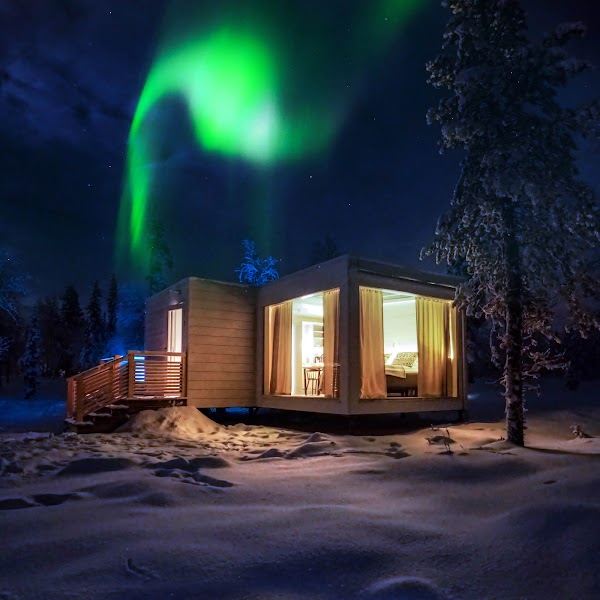
The catch with aurora road trips is timing. The far-north roads with the darkest skies spend much of the year closed or buried in snow, and the official driving season for most of them, high summer, is exactly when the sky never gets dark enough to show the lights. The ten drives below are picked for that overlap. Each one puts you under northern skies during the weeks when the road is open and the nights have already come back.
Aurora is visible only in real darkness, and at these latitudes the dark returns from around late August and holds into early April. Roads that stay open all winter, like the Finnish Lapland Arctic Road and, with specialist planning, Iceland's Ring Road, give you the whole season. Roads that close for winter give you a short overlap instead, usually from late August to mid or late September, after the midnight sun fades but before the snow shuts the gates.
Northern lights road trips at a glance
The table ranks each drive for the aurora, not for its summer scenery, so a dark gravel road in interior Alaska outranks a famous coastal highway that sits too far south.
| # | Route | Country | Distance | Duration | Driving season |
|---|---|---|---|---|---|
| 1 | Finnish Lapland Arctic Road | Finland | 1,100 km | 7 days | Jun to Sep, Dec to Mar |
| 2 | Ring Road | Iceland | 1,332 km | 9 days | Jun to Sep; winter with specialist planning |
| 3 | Alaska Highway | Canada to Alaska | 2,400 km | 8 to 10 days | May to Sep |
| 4 | Denali Highway | United States | 217 km | 2 days | late May to mid-Sep |
| 5 | Icefields Parkway | Canada | 232 km | 2 days | Jun to Sep |
| 6 | Top of the World Highway | Canada to Alaska | 174 km | 2 days | Jun to Sep |
| 7 | North Coast 500 | Scotland | 830 km | 6 days | May to Sep |
| 8 | Wild Atlantic Way | Ireland | 1,450 km | 10 days | May to Sep |
| 9 | Seward Highway | United States | 202 km | 1 to 2 days | May to Sep |
| 10 | Atlantic Ocean Road | Norway | 36 km | 1 day | late spring to early autumn |
If you only do one, drive the Finnish Lapland Arctic Road. It is the rare far-north route the maps keep plowed through December to March, when the nights are longest and the aurora is at its most active. You can chase clear skies for a week instead of gambling on a single evening.
1. Finnish Lapland Arctic Road, Finland
The Finnish Lapland Arctic Road follows the E75 for 1,100 km from Rovaniemi up through Saariselkä and Inari to Utsjoki and Nuorgam on the Norwegian border, and it is the only drive here with a true winter season of December to March. That matters because those are the darkest, most active aurora months, and the road stays open with studded tyres rather than closing like the summer-only routes. Every overnight between Inari and Nuorgam sits well north of the Arctic Circle, so you can leave the lit towns behind and watch the sky from the car.
2. Ring Road, Iceland
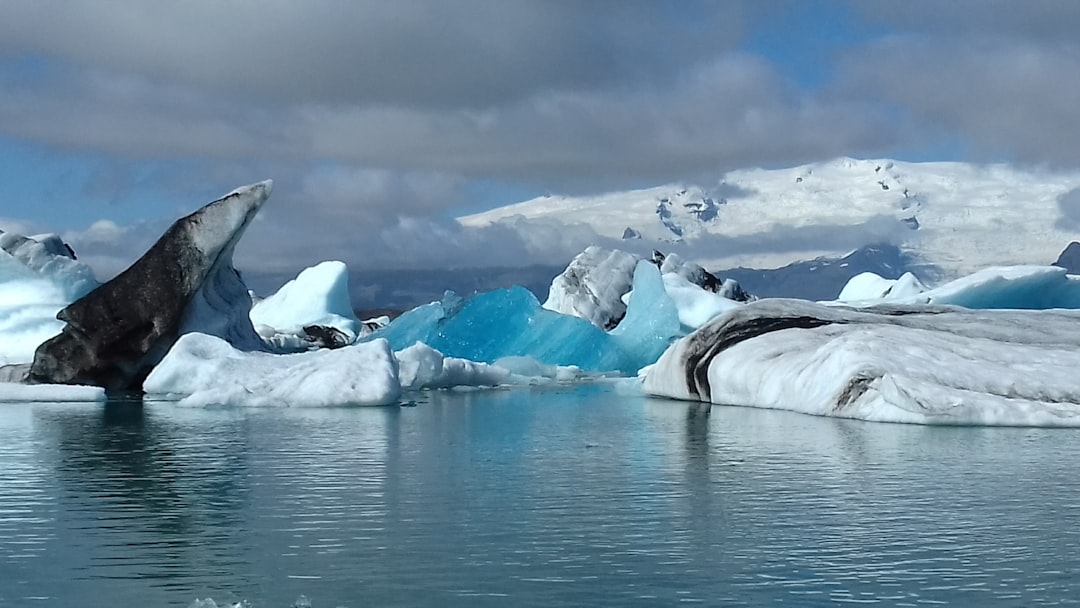
Iceland's Ring Road is the aurora drive most people picture, a 1,332 km loop past Jökulsárlón, Mývatn, and the north-coast towns where the lights appear on clear nights from roughly September onward. The route guide flags that a full winter circuit needs specialist planning, so the easy play is the September or late-March shoulder, when the nights are dark but the roads are still manageable. Base a few evenings on the darker north coast around Akureyri rather than near Reykjavík's glow.
3. Alaska Highway, Canada to Alaska
Fairbanks, where the Alaska Highway finishes after 2,400 km of boreal wilderness from Dawson Creek, sits almost directly under the auroral oval, which makes it one of the most dependable aurora towns on the continent. Drive the ALCAN in late August or the first half of September and the long dark gaps between Watson Lake, Whitehorse, and the Alaska line come with almost no light pollution. By October the services thin out and winter closes in, so the window is narrow.
4. Denali Highway, United States
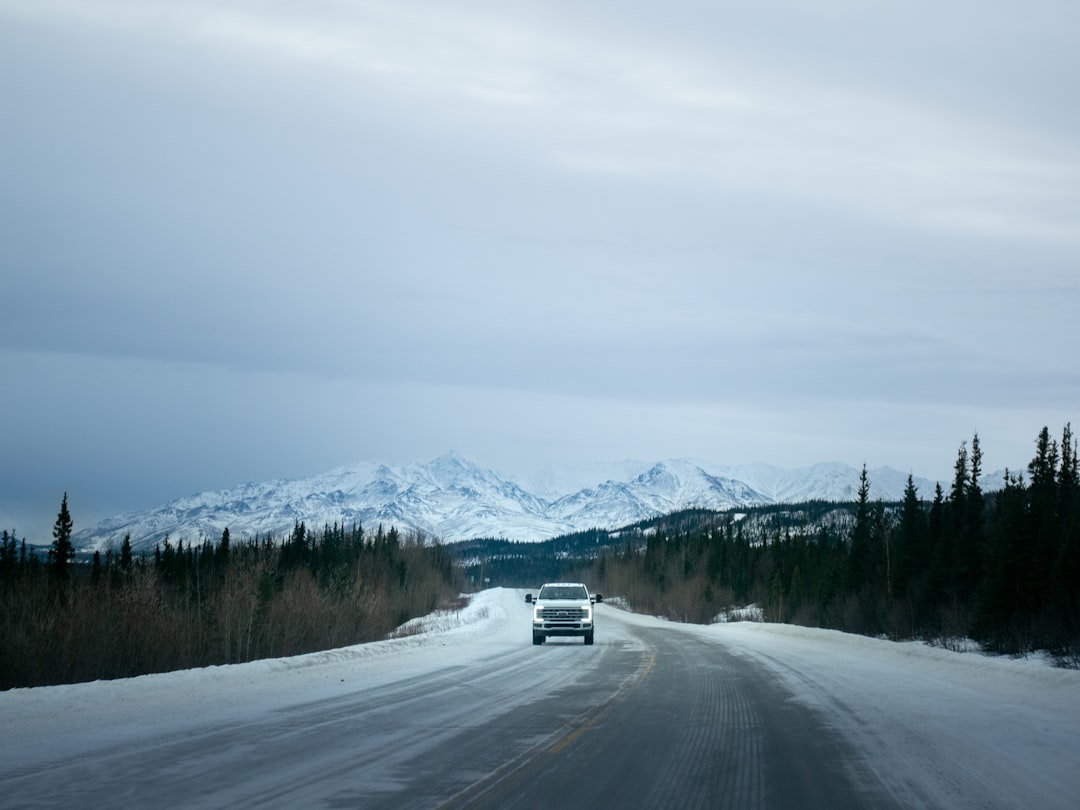
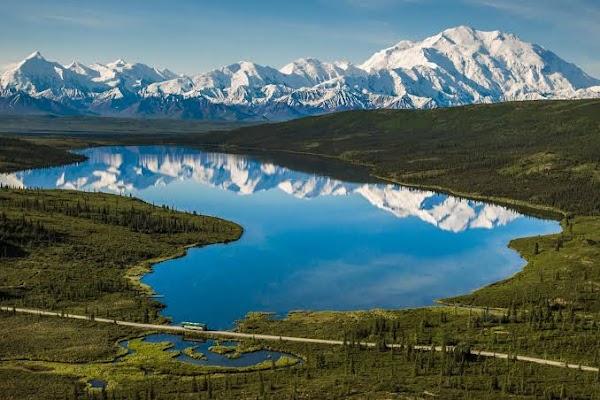
The Denali Highway is 217 km of mostly gravel across open tundra between Paxson and Cantwell, with no towns, no streetlights, and the Alaska Range on the horizon. That emptiness is what you want for aurora, and on a clear early-September night the whole sky is yours. The road gets no winter maintenance and closes by mid-September, so plan it for the last dark weeks of summer with a full spare, fuel reserve, and offline maps.
5. Icefields Parkway, Canada
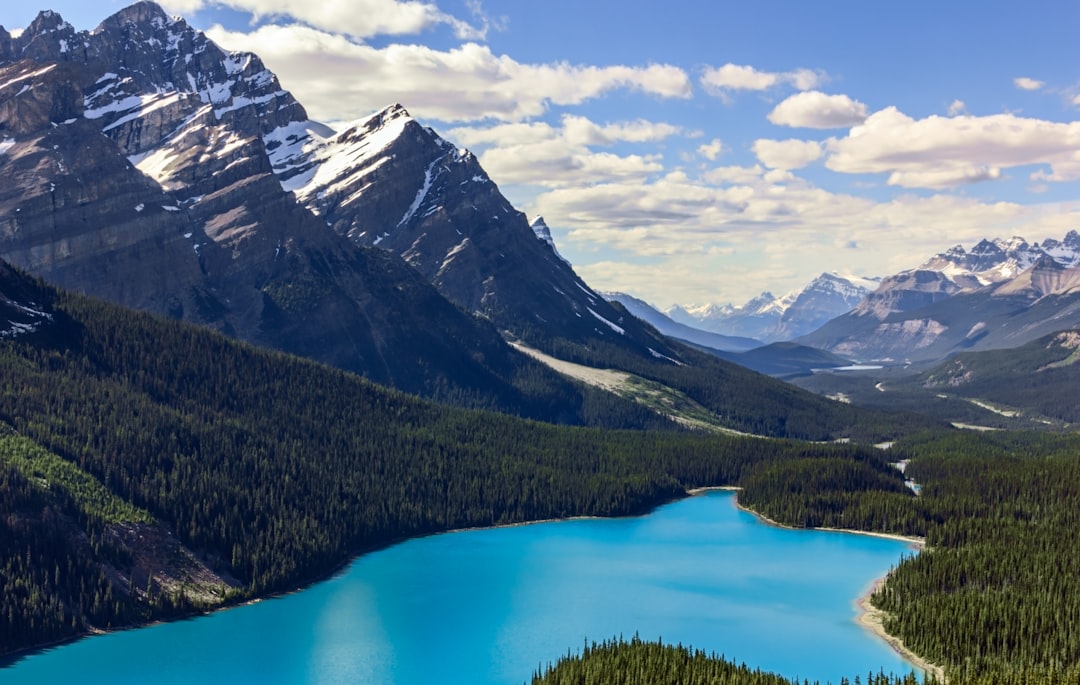
The Icefields Parkway threads 232 km of glaciers and turquoise lakes from Lake Louise to Jasper, and Jasper anchors one of the largest dark-sky preserves in the world. Aurora here is less of a sure thing than in the Arctic, but on an active September night the lights can stand over Bow Lake or the Columbia Icefield. The same pullouts give you the Rockies by day and a real shot at the lights after dark.
6. Top of the World Highway, Canada to Alaska
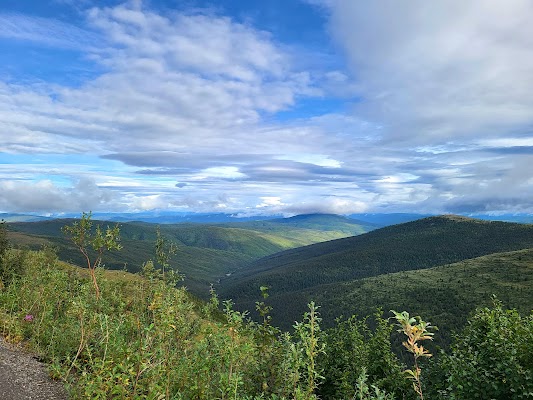
The Top of the World Highway climbs out of Dawson City onto a ridge that runs above treeline for miles toward the remote Poker Creek border. Based in Dawson, you are deep in the Yukon's dark interior, and the Midnight Dome overlook looks out over the town when the sky lights up. The gravel ridge and its ferry run only from June to September with no winter upkeep, so aim for the dark end of that season in late August or early September.
7. North Coast 500, Scotland
The North Coast 500 loops 830 km around the far north of Scotland through Thurso, Durness, and the empty coast of Sutherland, where locals have long called the aurora the Mirrie Dancers. This is the southernmost drive on the list, so the lights are an occasional reward rather than the main event, but September brings back real darkness while the single-track roads are still open. Park well away from Inverness and Thurso, and watch the northern horizon.
8. Wild Atlantic Way, Ireland
The Wild Atlantic Way starts at Malin Head, the most northerly point in Ireland and the country's best-known aurora lookout, before running south through Donegal, Achill Island, and the west coast over about 1,450 km. The lights are rare this far south and need a strong display, but Malin Head and the Donegal headlands face straight out over the dark Atlantic with nothing between you and the pole. September pairs the returning nights with a coast that is still warm enough to enjoy by day.
9. Seward Highway, United States
The Seward Highway runs 202 km from Anchorage along Turnagain Arm to Seward, past Beluga Point and the glacier-hung Kenai mountains. Southcentral Alaska sees the aurora less often than the interior because it sits lower and catches more coastal cloud, so treat the lights as a bonus on top of the scenery. On a clear September evening the pullouts along the Arm, away from Anchorage, give you water, mountains, and a dark northern sky in one frame.
10. Atlantic Ocean Road, Norway
The Atlantic Ocean Road is only 36 km of bridges and skerries between Kårvåg and Bud, but it faces open sea on Norway's aurora-rich western coast. It is too short to be a trip on its own, so slot it into a longer northern Norway stay and drive the causeway on a calm evening in early autumn. Use the designated parking, since waves can wash over the exposed sections in a swell. These three Atlantic-facing drives, this one, the Wild Atlantic Way, and the North Coast 500, also sit in our collection of scenic coastal drives if you want the daytime views to match.
When the lights actually appear
Two things set the timing. The roughly 11-year solar cycle raises and lowers activity over years. The season is what you plan around, because you need darkness, and at these latitudes that runs from roughly late August to early April, with a dead stretch around midsummer when the sun barely sets. Geomagnetic activity also tends to climb around the equinoxes, so late September and late March are good bets.
None of it is guaranteed on any given night. Check a Kp-index forecast and a local aurora alert before you commit, get well clear of town lights, give your eyes twenty minutes to adjust, and look north.
Frequently asked questions
What is the best road trip to see the northern lights?
For reliability, the Finnish Lapland Arctic Road, because it stays open through the dark December to March aurora peak rather than closing for winter like most far-north roads. Iceland's Ring Road and the drive to Fairbanks on the Alaska Highway are the next strongest.
When is aurora season for these drives?
Roughly late August to early April, whenever the nights are long enough. Midsummer has too much daylight this far north to see the lights, even when they are active. Activity often rises around the September and March equinoxes.
Can you see the northern lights on a summer road trip?
Not at these latitudes. Through June and July the Arctic sky never gets properly dark, so the aurora may be present but invisible. That is why the summer-only roads, like the Denali Highway and Top of the World Highway, only work for aurora in their last dark weeks of late August and early September.
Do I need a 4x4 or special car for an aurora road trip?
It depends on the road, not the aurora. Winter driving in Lapland or Iceland needs proper studded or winter tyres, and the gravel Denali and Top of the World highways want decent clearance and a full spare. Each route guide lists the vehicle and conditions to plan for.
Are the northern lights guaranteed if I drive one of these routes?
No. The aurora depends on solar activity and clear skies, and both are unpredictable. Driving a dark, high-latitude road in the right season improves your odds, but build in several nights and watch the forecast.
Start with the Finnish Lapland Arctic Road guide for the winter aurora run, compare it with Iceland's Ring Road, and map your own route on the interactive map.