Seven days is the sweet spot for a Southern Utah road trip: enough to drive the 740 km traverse from St. George to Monument Valley, hike into Zion's Narrows, watch sunrise over Bryce Canyon's hoodoos, and still reach Delicate Arch before dark. This is a one-way run through Utah's Mighty Five national parks, with Goblin Valley and Monument Valley folded in, and it is at its best right now. The catalog season is March to May and September to November, so autumn light and cool trails are exactly the reason to go.
The full route runs St. George to Monument Valley through Utah's five national parks, an open 740 km traverse rather than a loop, over seven to nine days. Below is the stop by stop plan, from the sandstone cliffs of Zion to the buttes of Monument Valley, with the timing and permit notes that keep a slickrock trip smooth.
Southern Utah itinerary at a glance
Here is how a seven-day traverse breaks down, west to east.
| Day | Base | Key stop | Signature moment |
|---|---|---|---|
| 1 | Springdale | Zion National Park | The Narrows and Emerald Pools |
| 2 | Bryce area | Bryce Canyon | Sunrise over the amphitheatre |
| 3 | Torrey | Capitol Reef | Pioneer orchards on the Fold |
| 4 | Moab | Goblin Valley | Mushroom hoodoos, then Moab |
| 5 | Moab | Arches National Park | Delicate Arch at golden hour |
| 6 | Moab | Canyonlands | Islands in the Sky mesa |
| 7 | Monument Valley | Monument Valley | The Mittens at sunset |
Day 1: St. George to Zion
Start in St. George, the low desert gateway in Utah's southwest corner, and drive the short hour to Zion National Park. Zion is the drama-first opener: the Virgin River has carved soaring white and red Navajo sandstone into a canyon you crane your neck to see out of. In the busy months the scenic canyon runs on a seasonal shuttle, so park in Springdale and ride in.
Spend the day on the water and the walls. The Emerald Pools trails are an easy warm up, and if the flow is safe, wading up The Narrows between thousand-foot walls is the signature Zion experience. Angels Landing is the famous one, but the chained final section now needs a separate lottery permit. Without one, hike to Scout Lookout instead and take in nearly the same view. Refuel with a hearty breakfast or burger at Oscar's Cafe in Springdale before you turn inland.
Day 2: Bryce Canyon
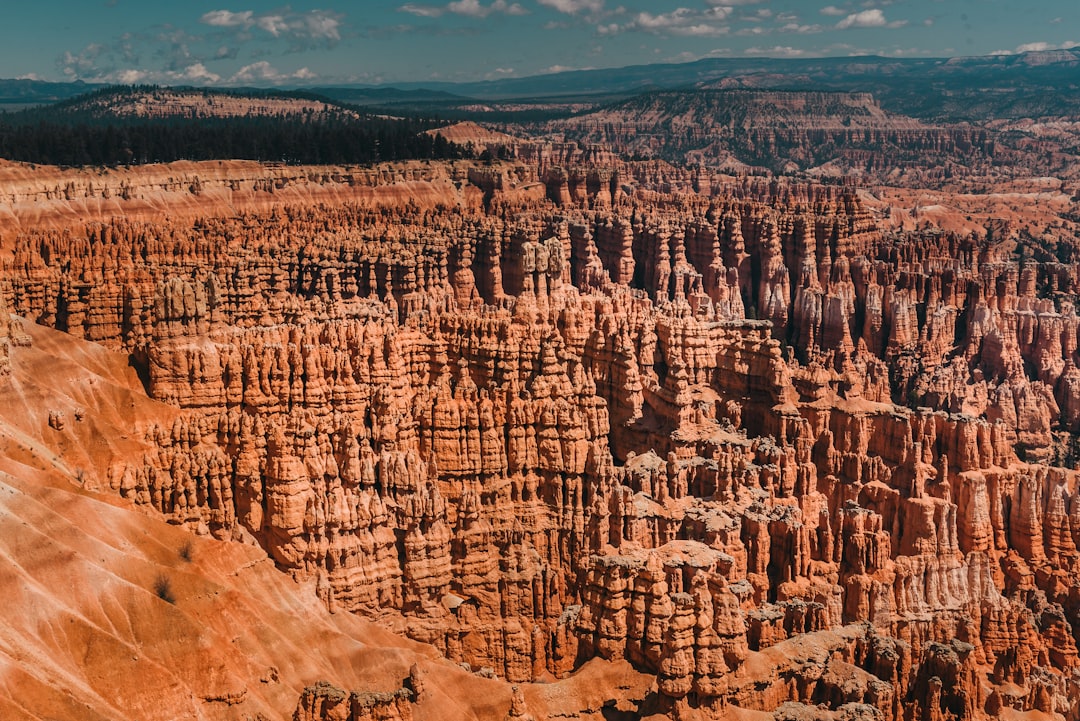
Climb east and up to Bryce Canyon, where 60 million years of erosion have left thousands of orange-red hoodoos stacked in a natural amphitheatre. It sits far higher than Zion, so nights are cold and the air is thin.
Bryce rewards early risers above all else. Stand at the rim for sunrise, when the first light sets the hoodoos glowing, then drop into the bowl on the Navajo Loop Trail past landmarks like Thor's Hammer. This is short-hike country: an hour below the rim shows you more than a day of driving. Turn in early, because tomorrow starts with one of the loneliest, most beautiful stretches of the whole traverse.
Day 3: Capitol Reef and the Waterpocket Fold
Drive Scenic Byway 12 across high plateau to Torrey, the small town at the door of Capitol Reef. This is the quiet giant of Utah's Mighty Five, built around the Waterpocket Fold, a 160 km wrinkle in the Earth's crust.
The surprise here is green. In the historic Fruita district, pioneer orchards still grow on the canyon floor, and in season you can pick fruit from the trees. Walk a slot canyon, drive the scenic road below the cliffs, then treat yourself to a farm-to-table dinner at Hell's Backbone Grill near Boulder. Capitol Reef gets a fraction of Zion's crowds, which is exactly its appeal.
Day 4: Goblin Valley to Moab
Head northeast and detour into Goblin Valley State Park, where hundreds of mushroom-shaped sandstone hoodoos cluster in an eerie open basin. There are no fences and few trails: you simply wander among the goblins, which is why kids and photographers both love it.
From there it is a straight run to Moab, the adventure hub that anchors the eastern half of the traverse. Settle in for three nights. Grab a craft beer and pub food at the Moab Brewery, and check park conditions for the days ahead.
Day 5: Arches National Park
Arches holds more than 2,000 natural sandstone arches, the greatest concentration on Earth, packed into one compact park just above Moab. The paved scenic drive links most of the headliners, so this is an easy day by car with short walks between them.
Save energy for the classic: the moderate trail to Delicate Arch, the freestanding span that graces Utah's license plates. Time it for late afternoon so you reach the arch as the sandstone turns molten in the golden hour. Windows, Balanced Rock, and the Fiery Furnace fill the rest of the day.
Day 6: Canyonlands and Islands in the Sky
Canyonlands is the wild one. The Colorado and Green Rivers have carved a vast labyrinth of canyons below, and the Islands in the Sky mesa, closest to Moab, reveals the full geological scale from above.
Drive the rim road to Grand View Point and Mesa Arch, where a thin stone frame catches the sunrise if you are willing to set an alarm. Canyonlands is bigger and emptier than its neighbours, so it feels less like a park and more like standing at the edge of the planet.
Day 7: south to Monument Valley
Leave Moab and drive south through Blanding into Navajo country, with a stop at the Muley Point Overlook for a dizzying look down the San Juan River canyons. Then the horizon delivers the finale: Monument Valley, where the Mittens and Merrick Butte rise 300 m straight off the desert floor.
This is a Navajo Tribal Park, not a national park, and it defines the American West in a single panorama. Watch the buttes catch the last light, then have a Navajo dinner at The View Restaurant overlooking the formations. It is the perfect period at the end of a red rock sentence.
Best time to drive Southern Utah
The catalog window is March to May and September to November, and the reason is heat. Summer bakes the low desert around St. George, Moab, and Monument Valley, while the high country at Bryce can still see snow on the shoulders of the season. Spring and autumn thread the needle: hikeable days, cool nights, and thinner crowds than the July peak. Zion's shuttle and the Angels Landing lottery run in the busy months, so plan those ahead. For more sand and stone drives across the seasons, browse our Desert Roads collection.
Frequently asked questions
How many days do you need for a Southern Utah road trip?
Seven days is ideal for the full 740 km traverse from St. George to Monument Valley, giving each of the five national parks its own time plus Goblin Valley and Monument Valley. Stretch it to nine if you want extra hiking days or a slower pace, or trim to a Zion, Bryce, and Capitol Reef loop if you only have a long weekend.
What is the best time of year to drive Utah's national parks?
March to May and September to November. Summer heat is intense in the low desert, and Bryce Canyon's high rim can hold snow early and late in the season. Spring and autumn bring hikeable temperatures, cool nights, and fewer crowds than the summer peak.
Do you need a permit for Angels Landing in Zion?
Yes, for the chained final section. Zion now runs a seasonal lottery for the Angels Landing summit route. Without a permit you can still hike to Scout Lookout, which delivers nearly the same view and needs no permit. Zion's scenic canyon also uses a seasonal shuttle, so plan to park in Springdale.
Is Southern Utah doable as a loop or one way?
This itinerary is a one-way traverse from St. George to Monument Valley, which is the most efficient way to string the parks together without backtracking. A one-way rental car makes it painless, or you can turn it into a loop by returning west from Monument Valley through Arizona.
Which Utah national park is the best?
For first-timers, Zion and Bryce Canyon are the headliners, one a river canyon you look up out of and the other a hoodoo amphitheatre you look down into. Arches has the most iconic single sight in Delicate Arch, while Capitol Reef and Canyonlands reward anyone who wants solitude. The joy of this drive is that you do not have to choose.
Ready to build your own version? Open the full Southern Utah Parks Traverse route guide for the complete stop list, then plot your days on the interactive map. Craving more desert before or after? Death Valley picks up the salt-and-badlands story a day's drive west, and the Million Dollar Highway climbs into the Colorado San Juans just east of Moab.